 Before posting about the details of what we did on the night of the Pre-Engagement Dala Exchange, I’ve decided to write a little bit about Naveed and my looks for the evening. This first post is about Naveed’s.
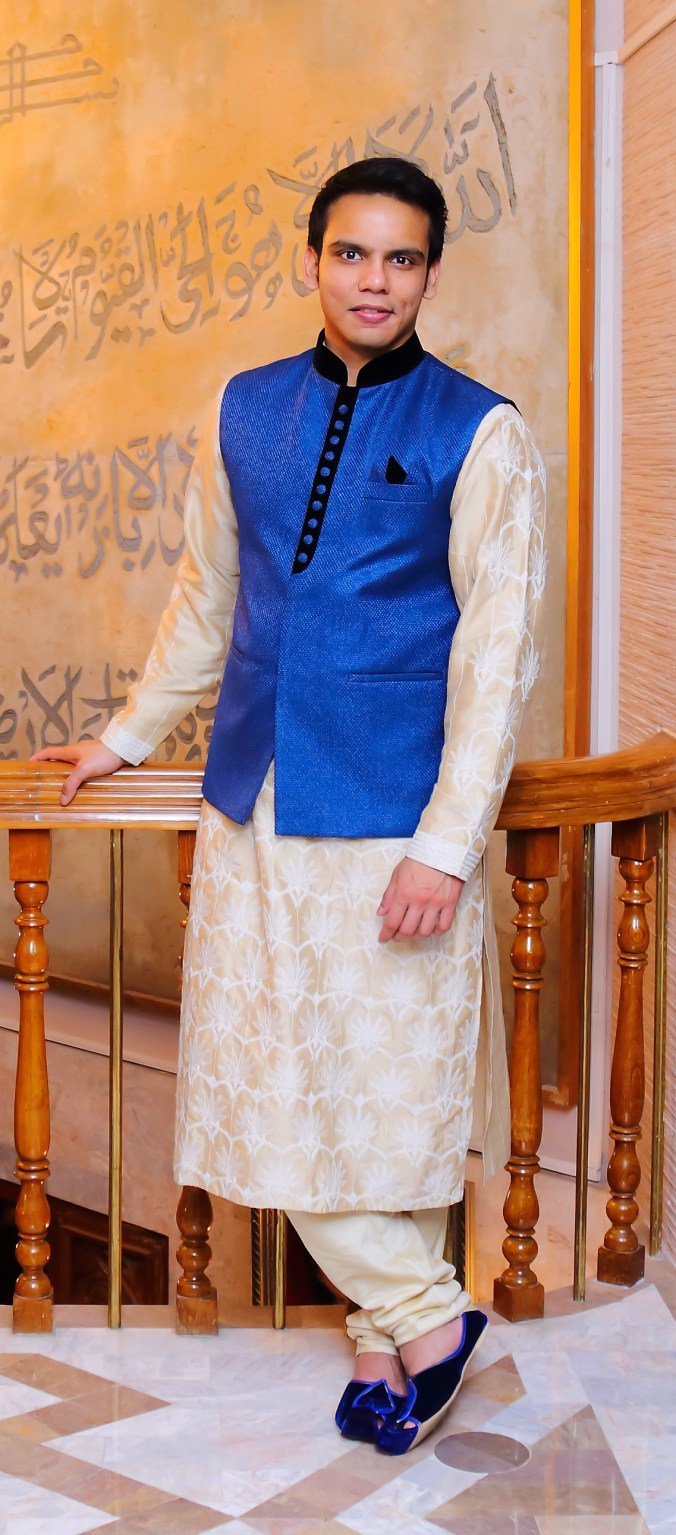
Panjabi, jacket, nagra: Nabila
My family and I hosted the dala exchange at our house (click here to read more about the night and our dalas/gifts), and generally, younger members of the groom’s family, such as his siblings, cousins and their families/partners, bring over the bride’s dalas to her house. It’s not common practice for the groom and his parents to take part in the delivering of the dalas, however, I really did not want to take part in or organise an event without them, and so, Naveed and his parents joined us later on in the evening after his siblings, cousins and their partners brought over my dalas to our house.
The outfits that Naveed and I wore that evening were also gifts; Naveed’s attire was a gift from my family and my outfit a gift from his. Since we’re both also very picky about what we wear, Naveed chose his ensemble before the event and I asked my mom to design mine.
Naveed does not like any sequins or crystals on his traditional attires at all (it’s quite common for men’s traditional panjabis and sherwanis to have such detailing), therefore he chose a cream coloured, pure silk panjabi with white hand-embroidery. The embroidery on his panjabi is of a particular style, known as lucknowi stitching (originating in the Lucknow region of India). It’s done completely by hand and requires the meticulous work and of expert eye of experienced artisans.
 As we had also decided on an underlying blue theme for the evening, he decided to pair the panjabi with a blue jacket and nagra shoes. This form of panjabi-jacket pairing has become immensely popular in recent times, and this style of jacket itself is now known by many names. Some call it a ‘Mujib Coat’, after the former prime minister of Bangladesh, and father of the nation, Sheikh Mujibur Rahman, others call it a Nehru Jacket, after the former prime minister of India, Jawaharlal Nehru, whilst others call it a ‘Modi Coat’, after the current prime minister of India, Narendra Modi. No matter which name you refer to it by, it’s evident that it’s a style that has been adopted and popularised by powerful and influential men of the Indian sub-continent.
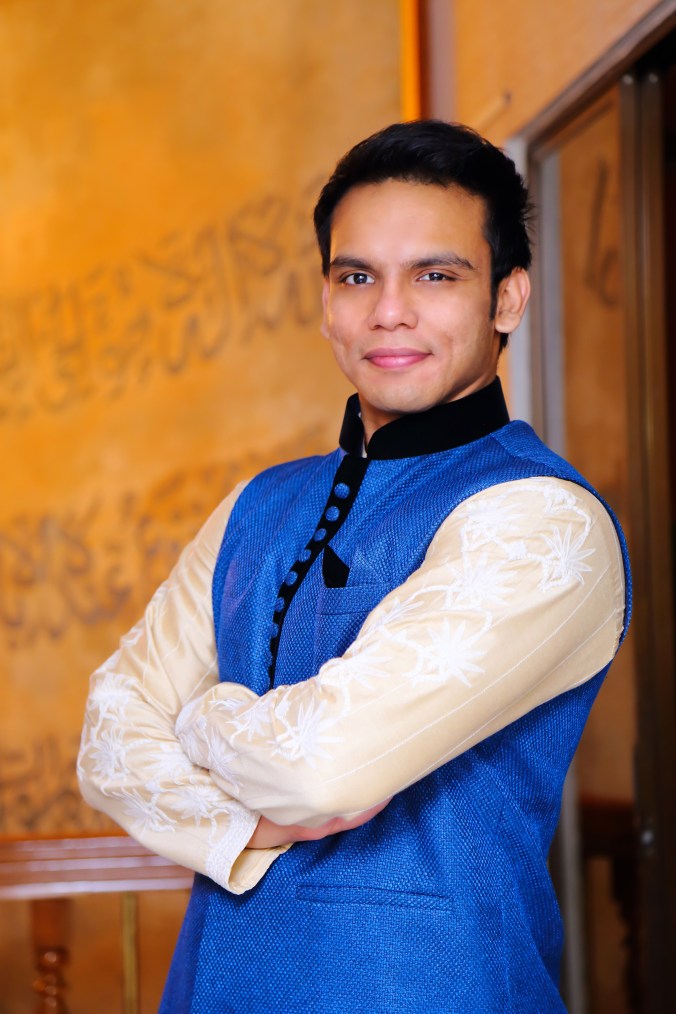
Panjabi, jacket and nagra: Nabila


The jacket Naveed wore is one of my favourites; made entirely of dupion silk, it has a blue body with midnight blue (almost black) accentuations in the collar, placket and pocket square. The jacket also complements his nagra, the traditional style of shoes that he chose to wear. Nagra shoes today come in a variety of styles, however, we found this one to be particularly unique and uncommon. What appealed to him specifically, was the combination of the two shades of blue (went perfectly with his jacket) and the styling around the front of the shoes.
That was Naveed’s look, up next in my upcoming post, I’ll be writing about my attire, accessories and make-up!
 Nabila: Trends and Traditions
Pingback: My Bangladeshi Wedding: My look for the Pre-Engagement Dala Exchange | Nabila: Trends and Traditions